finance
Islington's High Streets and Traders Navigate a Choppy Global Session
From the cafes of Upper Street to the workshops of Clerkenwell, local business owners are feeling the pull of a volatile trading day that has sent Wall Street sharply lower and pushed energy costs higher.
How we reported this
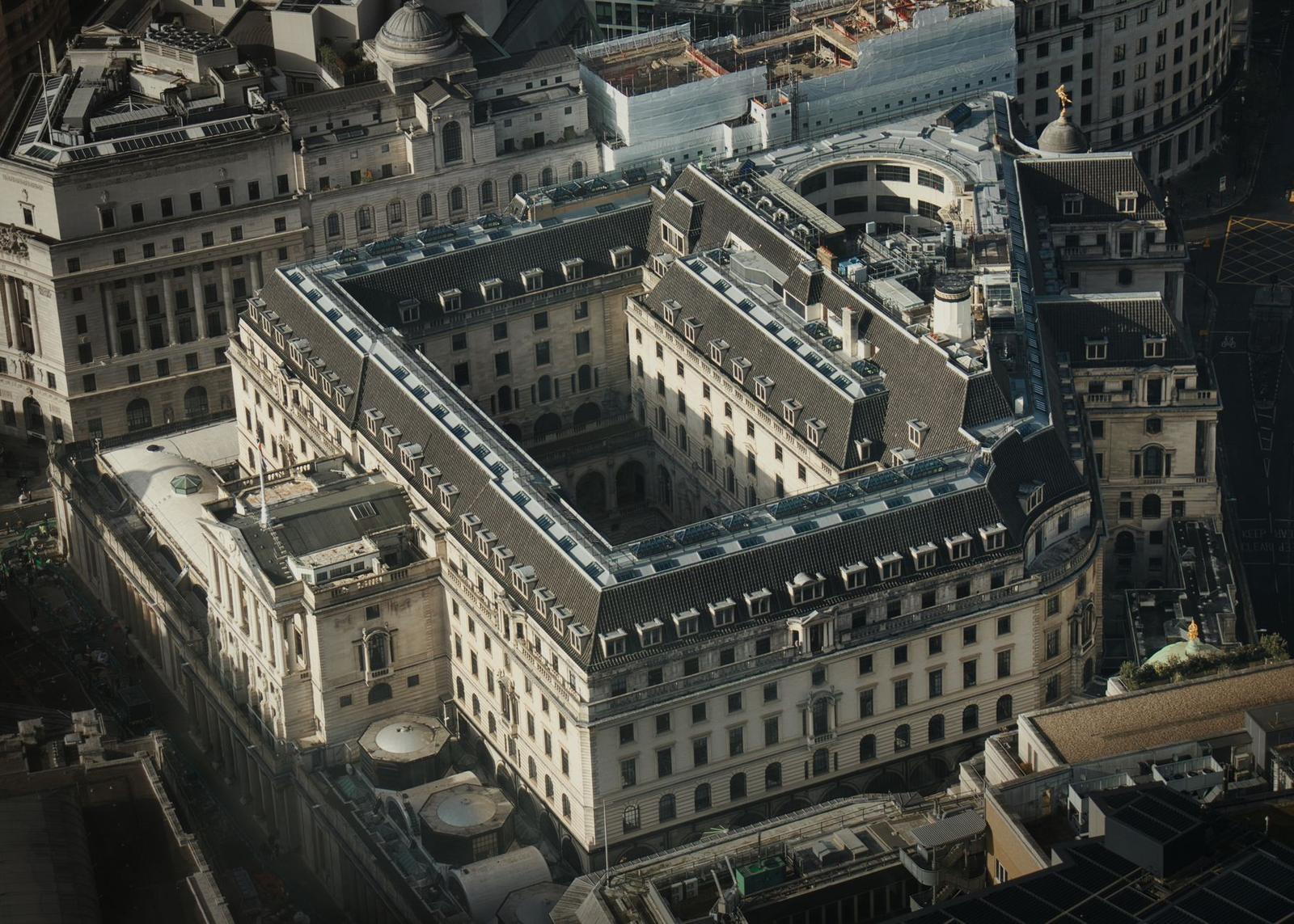
For the independent retailers, hospitality operators and creative businesses that give Islington its commercial character, Sunday's market session offered a familiar mixture of pressure and nuance. Energy costs, the pound's purchasing power, and the health of consumer confidence all shift with the tide of global markets, and today's tide was notably mixed. While London's benchmark held relatively steady compared with sharper falls elsewhere, the wider picture carries real implications for the borough's trading community.
The FTSE 100 slipped 0.45% to close at 10,524.76, a measured decline by the standards of a turbulent global session. That relative composure is worth noting: across the Atlantic, American markets sold off considerably more heavily. The S&P 500 fell 1.06% to 7,453.85, the Dow Jones dropped 1.30% to 51,870.24, and the Nasdaq retreated 1.19% to 25,573.04. For Islington businesses with any exposure to dollar-denominated suppliers, software subscriptions priced in US currency, or export earnings routed through American clients, a weakening Wall Street is rarely background noise.
The session's sharpest move came from Tokyo. The Nikkei 225 tumbled 4.03% to 64,141.12, a fall significant enough to ripple through risk sentiment globally. Asian markets were otherwise more composed: the Hang Seng edged up 0.54% to 25,143.05, while the Straits Times Index fell 0.73% to 5,498.95. In Europe, the CAC 40 was essentially flat at 8,340.11, up just 0.02%, and the DAX eased 0.28% to 24,846.69. The relatively contained European picture offered some insulation for London, though not enough to keep the FTSE in positive territory.
Energy and Commodities: A Squeeze on Input Costs
The commodity moves are where Islington's small business owners may feel the session most directly. Brent crude rose 1.41% to 89.34 US dollars a barrel, and WTI crude climbed 1.24% to 82.79 US dollars. For the borough's food and drink operators, delivery-dependent retailers and any business running a fleet of vehicles, rising oil prices feed through into operating costs with little delay. Natural gas, by contrast, fell 1.82% to 2.858, which may offer a modest counterweight for premises-heavy businesses watching their energy bills. Copper gained 1.21% to 6.341 US dollars, a move that tends to raise costs for construction and fit-out trades, relevant in a borough where renovation and commercial refurbishment remain active. Gold slipped 0.15% to 4,012.80 US dollars an ounce, while silver rose 0.85% to 56.805 US dollars and platinum eased 0.81% to 1,599.40 US dollars.
In currency markets, the pound's movement against the dollar shapes the real-world cost of anything Islington businesses import. A softer sterling raises the price of goods sourced overseas, from kitchen equipment to tech hardware, even before tariffs or shipping are considered. The FTSE's modest decline, while less dramatic than New York's, reflects a market still working through the same underlying anxieties: sticky inflation expectations, geopolitical uncertainty, and questions about how long elevated interest rates will persist.
Digital assets provided a brighter corner of the session. Bitcoin rose 0.63% to 65,096.17 US dollars, Ethereum gained 1.27% to 1,895.27 US dollars, and Solana climbed 1.45% to 77.46 US dollars. XRP posted the strongest gain among the majors, rising 1.81% to 1.1158 US dollars. BNB added 0.23% to 571.69 US dollars, while Dogecoin slipped 0.25% to 0.07213 US dollars. For Islington's growing cohort of tech founders, digital creatives and fintech workers, crypto portfolio movements carry tangible relevance alongside their more traditional investment exposure.
The overall picture for Islington is one of managed uncertainty rather than acute alarm. The FTSE's relative steadiness against a backdrop of sharper global falls is a small comfort, but rising energy prices and a softer Wall Street are conditions that test the resilience of small and independent businesses operating on tight margins. Readers with pension savings, ISAs or any equity exposure will find today's figures useful context, though individual circumstances vary widely. This article is general information only and does not constitute personal financial or investment advice. Before making any financial decisions, consider your own situation and consult a licensed professional.